Nearly two decades after The Black Parade turned My Chemical Romance into one of the defining bands of the emo era, the album still has an uncanny ability to make a stadium feel intimate.
That was the magic of My Chemical Romance’s performance at San Diego’s Petco Park on Sunday night. As part of the band’s 2026 celebration of The Black Parade, the group resurrected its most ambitious record not as a museum piece, but as a fully realized theatrical experience—one that made a convincing case for the album’s continued relevance.
From the opening moments, the production leaned unapologetically into the mythology of The Black Parade. The imagery, costumes and staging transformed Petco Park into something resembling a massive outdoor theater, while the band moved through the album’s dramatic narrative with the confidence of musicians who know exactly how deeply these songs have embedded themselves into their audience.
And then came the songs.
Hearing The Black Parade performed live in this setting emphasized just how cinematic the record remains. “The End.” and “Dead!” established the theatrical tone, while “Mama,” “Teenagers” and “Famous Last Words” demonstrated the album’s remarkable range. But, inevitably, it was “Welcome to the Black Parade” that turned the entire venue into a single voice.
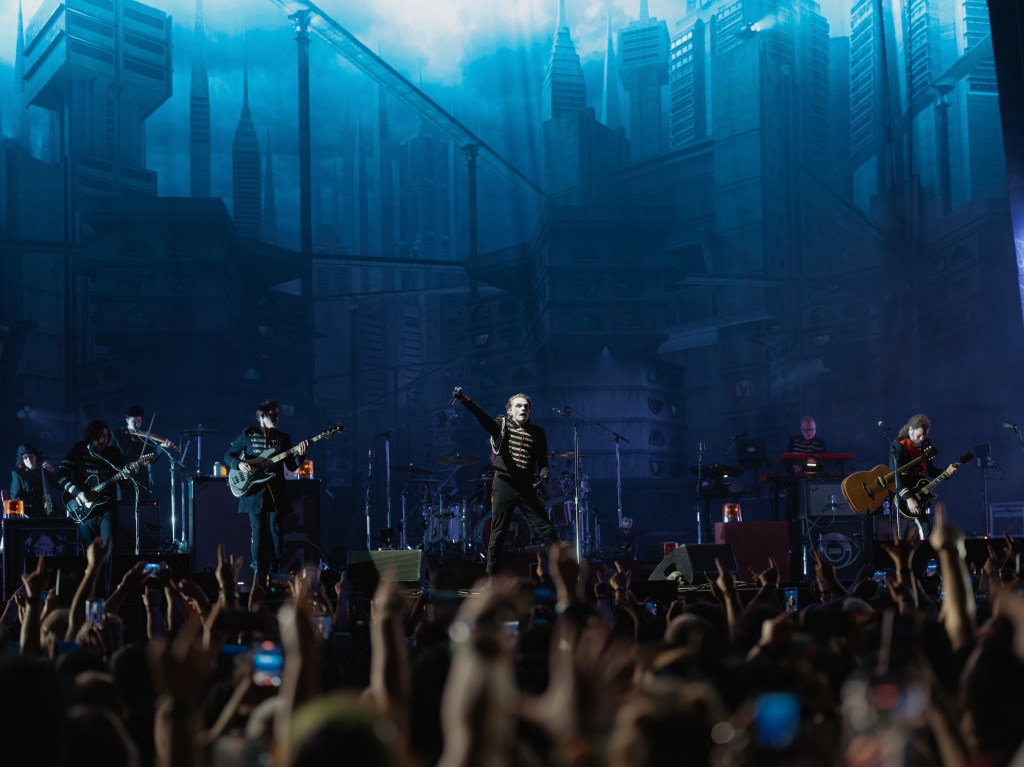
The moment could have easily become pure nostalgia. Instead, it felt strangely immediate.
That is perhaps the greatest achievement of this era of My Chemical Romance: they have managed to revisit a record inseparable from the mid-2000s without becoming trapped there. The band isn’t simply recreating 2006. It is presenting The Black Parade as a piece of rock theater that has had nearly 20 years to acquire new meaning.
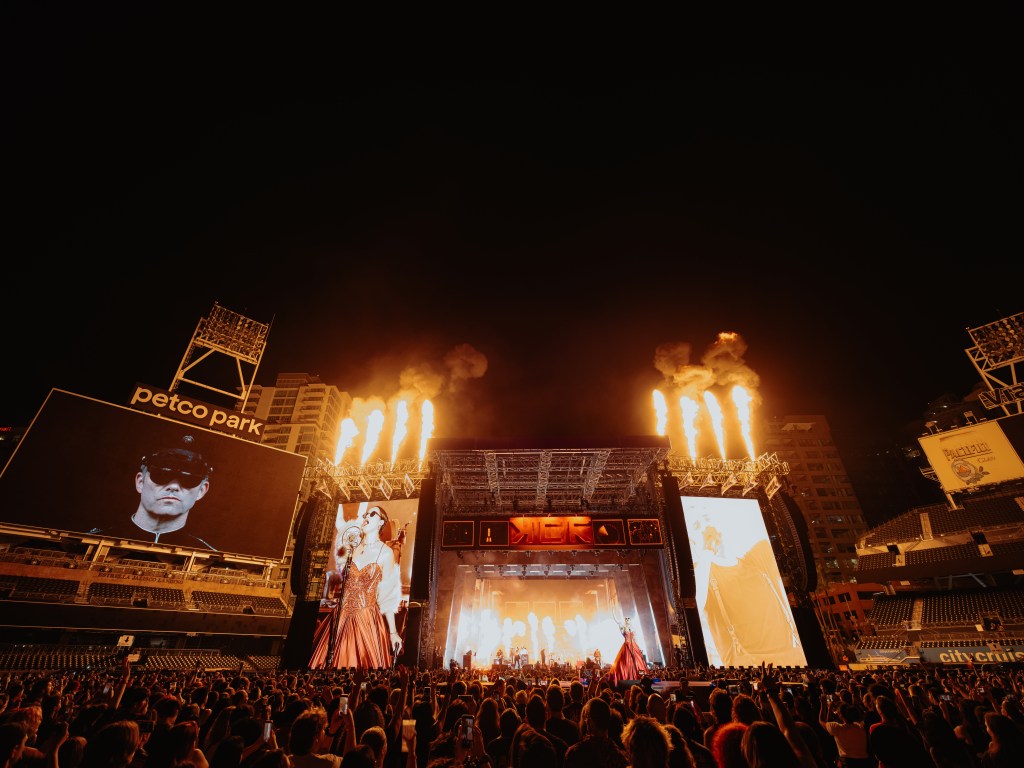
The B-stage provided the night’s most effective counterpoint to the enormous production. Positioned within the audience, it stripped away some of the distance inherent in a stadium show and put the band directly in the middle of the crowd. After the visual excess of the main stage, the change in scale was striking. Suddenly, My Chemical Romance felt less like a stadium spectacle and more like a band playing for the people who had followed them all these years.
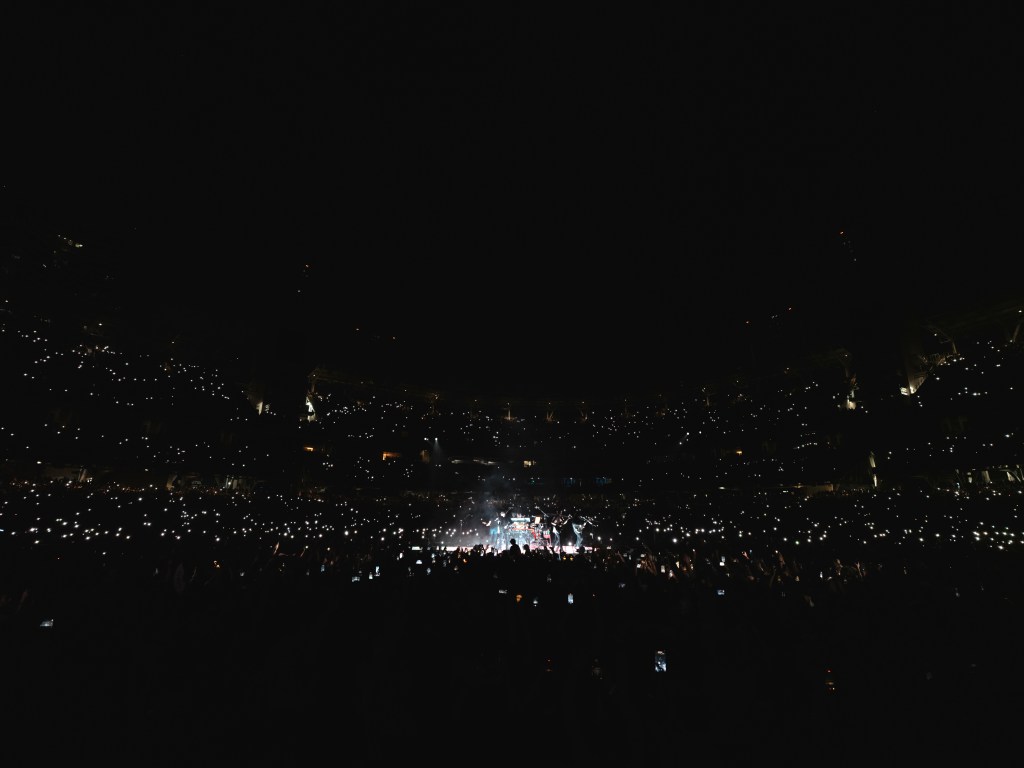
That intimacy also revealed something important about the band’s relationship with its audience. The crowd didn’t merely watch the show—they participated in it. Lyrics became chants. Guitar lines triggered eruptions of recognition. Entire sections of the stadium seemed to anticipate every musical turn before it arrived.
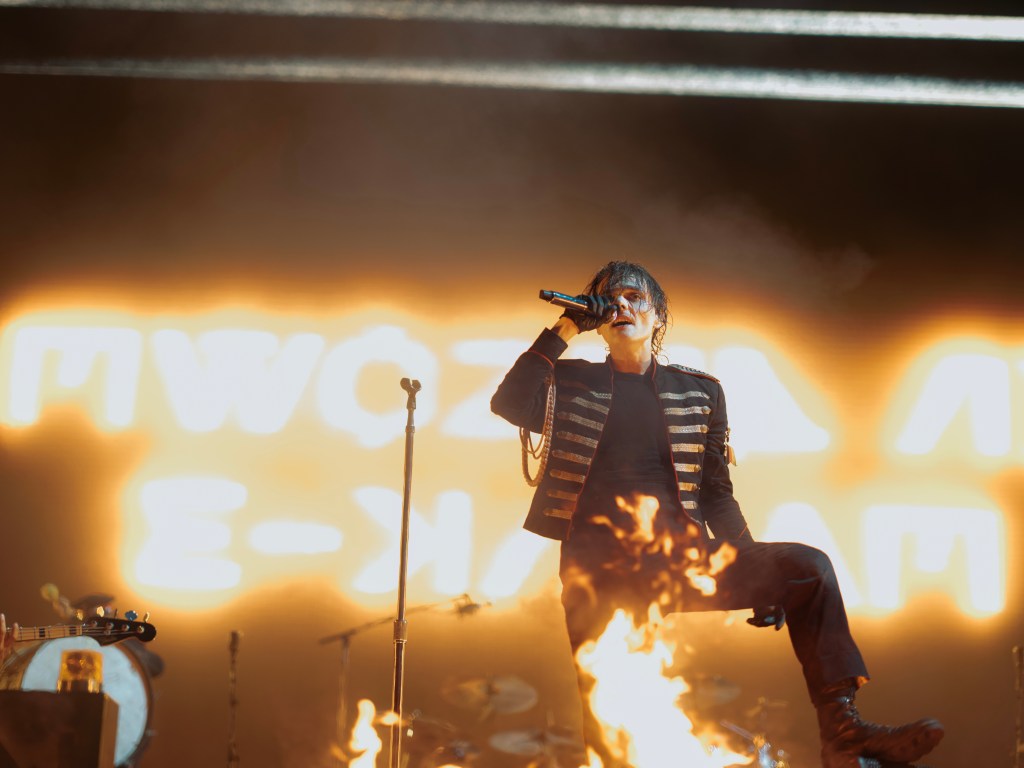
There was an unmistakable generational quality to the night. For fans who discovered The Black Parade when it was first released, the performance carried the weight of memory: teenage years, old headphones, eyeliner, heartbreak and the feeling that these songs were somehow speaking directly to you. For younger fans, meanwhile, the album exists not as a relic but as inherited canon.
My Chemical Romance understood that distinction.
Rather than simply reproducing the past, the band turned The Black Parade into a present-tense event. The result was simultaneously theatrical, nostalgic and surprisingly alive. It was a reminder that some albums don’t simply age—they become part of who we are.
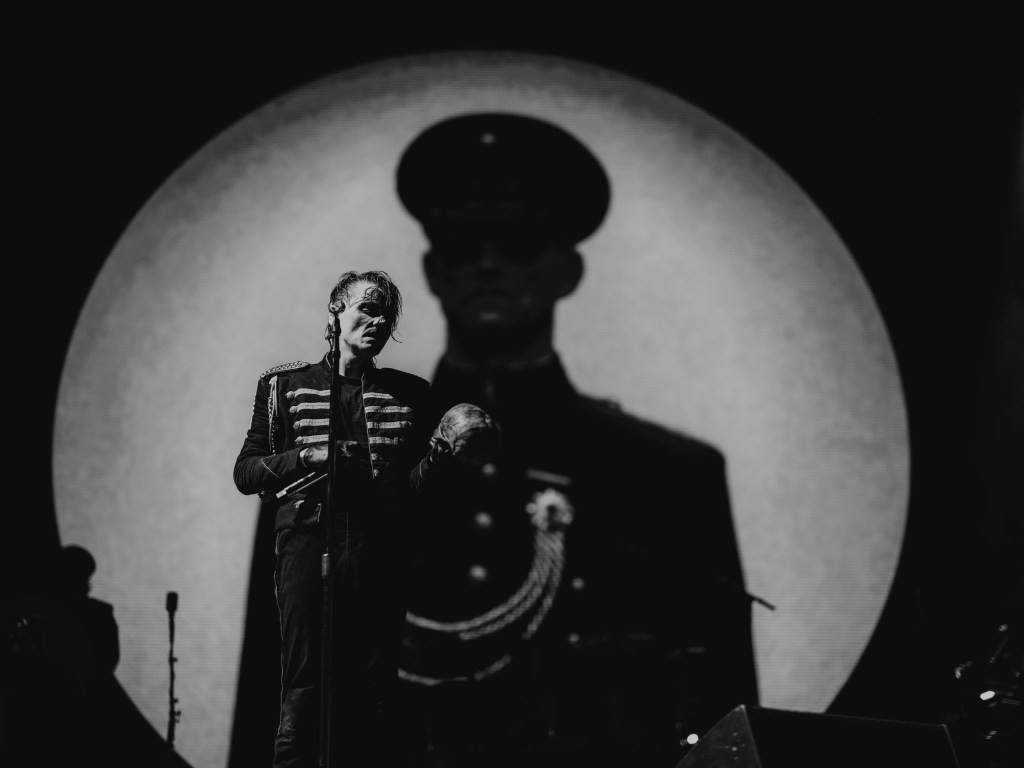
My Chemical Romance gave us a full experience — nostalgia, theatrics, chaos, emotion, and the kind of connection that only happens when an entire crowd knows every single word.
At Petco Park, the Black Parade wasn’t marching backward. It was still moving forward and made us feel alive.


Leave a Reply